Too Many Buckets, Not Enough Water: How Account Sprawl Is Quietly Draining Your Side Hustle Income
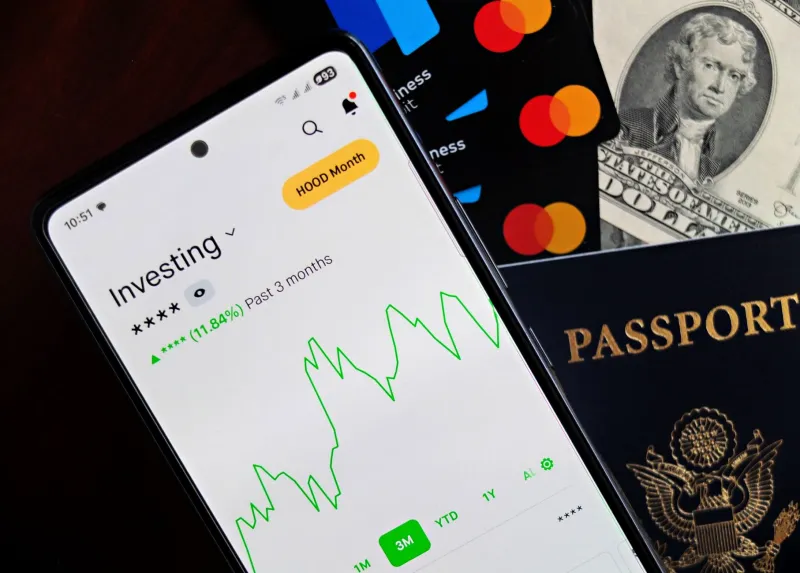
Picture this: You've got $180 sitting in your PayPal from a design gig last month. Another $95 in Venmo from splitting a client invoice. A Cash App balance of $60 from some odd jobs. A savings app with $312 you transferred "to keep safe." And your main checking account — the one that actually pays your bills — is hovering near zero.
You're earning. You're hustling. But somehow, you're still broke by the 20th of every month.
Welcome to account sprawl, and it's costing you more than you think.
What Account Sprawl Actually Means (And Why It Happens)
Account sprawl is what happens when your income sources multiply faster than your financial infrastructure can handle them. It's not a character flaw — it's practically a rite of passage for anyone building multiple income streams in the digital economy.
You start freelancing, so you open a separate checking account to keep things "clean." A client pays you through Zelle, so now that's a thing. You try out a savings app because the APY looked good. Your Etsy shop deposits to one account, your Fiverr gig to another. Before long, you've got money scattered across six platforms and no clear picture of your actual financial position.
The problem isn't that you have multiple income streams — that's actually smart. The problem is that your money management hasn't caught up with your earning strategy.
The Hidden Costs Nobody Talks About
Here's where it gets real. Fragmented accounts aren't just annoying to manage — they're actively eating into your returns in ways that are easy to overlook.
Idle balance fees and opportunity costs. Most payment platforms like PayPal, Venmo, and Cash App don't pay you anything to hold your money. If you've got $400 sitting in your PayPal balance for three weeks before you remember to transfer it, that's money earning zero. Meanwhile, a high-yield savings account could've been putting that balance to work at 4-5% APY.
Transfer delays and float losses. Moving money between accounts takes time — sometimes 1-3 business days for standard transfers. During that window, your cash isn't earning, and if a bill hits before the transfer clears, you might trigger an overdraft fee. Banks collected over $7 billion in overdraft fees in 2023, and a good chunk of that came from people who had the money — just not in the right place at the right time.
Micro-fees that compound. Some platforms charge for instant transfers. PayPal charges 1.75% (up to $25) for instant withdrawals. Cash App charges 0.5-1.75% for instant deposits. If you're pulling money out of these platforms regularly, those percentages add up fast. On $2,000 a month in side hustle income, you could easily be handing over $20-40 in transfer fees alone.
Tax season chaos. Every platform you use generates its own 1099 or transaction history. More accounts mean more documents, more reconciliation, and more opportunities to miss something. That's either hours of your time or dollars paid to an accountant to sort it out.
The Real-World Math
Let's say you're earning $2,500 a month across three side hustles. Your money moves through four different platforms before landing somewhere useful. You're losing roughly:
- $35/month in instant transfer fees
- $40/month in opportunity cost from idle balances (at a conservative 4% APY)
- $15/month in miscellaneous account maintenance fees
That's $90 a month, or $1,080 a year, just in friction costs. Over five years, assuming you invested that instead? You're looking at over $6,500 lost — not to bad investments, but to bad account architecture.
The Fix: Building a Leaner Money Stack
Consolidation doesn't mean jamming everything into one account and hoping for the best. It means being intentional about which accounts actually serve a purpose and eliminating the ones that don't.
Step 1: Audit every account you have. Seriously, write them all down. Include payment apps, savings tools, checking accounts, and anywhere else money lands. Then ask: does this account earn interest, serve a unique function, or reduce friction? If the answer is no, it's a candidate for elimination.
Step 2: Pick one central hub. Ideally, this is a checking account with no fees, solid digital tools, and fast transfer capabilities. Many online banks and fintech platforms offer free checking with built-in budgeting features. All incoming side hustle income should funnel here first — even if it means changing your payout settings on Upwork, Etsy, or wherever you're earning.
Step 3: Automate the routing. Once money hits your hub account, set up automatic transfers to your high-yield savings or investment accounts. Even $50-100 a week moved automatically starts building real momentum. The goal is to eliminate the manual decisions that let money stagnate.
Step 4: Minimize payment app balances. Treat platforms like Venmo, PayPal, and Cash App as pass-throughs, not storage. Set reminders (or automate where possible) to sweep balances weekly. Don't let money sit idle in a platform that's not paying you anything to hold it.
Step 5: Keep one dedicated account for taxes. This is actually worth maintaining as a separate account. Anytime side hustle income lands in your hub, transfer 25-30% into a dedicated tax savings account immediately. This one account saves you from the annual panic of owing the IRS money you already spent.
What Consolidation Actually Looks Like
A leaner account structure for a typical multi-income earner might look like this:
- One free checking account as the income hub
- One high-yield savings account for both emergency funds and short-term goals
- One dedicated tax savings account (even a basic savings account works)
- One investment account for long-term wealth building
That's four accounts with clear, distinct purposes. Payment apps become tools, not storage. Every dollar has a job, and nothing sits idle collecting nothing.
The Bigger Picture
Building multiple income streams is one of the smartest financial moves you can make in today's economy. But the architecture behind how you manage those streams matters just as much as the streams themselves. Earning more doesn't automatically mean keeping more — not if friction, fees, and fragmentation are eating your margins.
The digital age has made it easier than ever to earn money from multiple sources. It's also made it easier than ever to accidentally create a financial mess that undermines all that effort. Getting your account structure right isn't the most exciting part of the hustle, but it might be the most profitable thing you do this year.
Start with the audit. You might be surprised how much you're leaving on the table.