Autopilot Investing Sounds Smart — Until You See What It's Actually Costing You
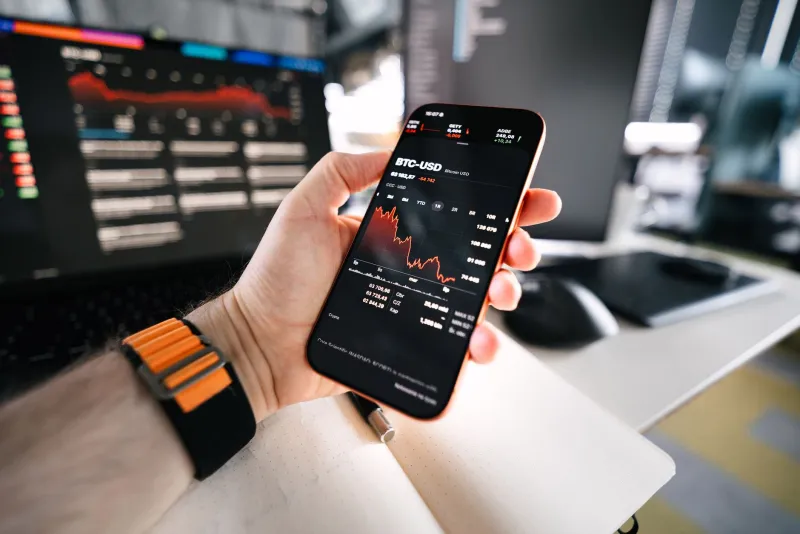
There's a version of financial adulting that sounds almost too good to be true: connect your bank account, pick a risk tolerance, and let an algorithm grow your wealth while you focus on literally everything else in your life. No charts to read, no market news to obsess over, no uncomfortable decisions.
Millions of Americans have bought into this idea — and honestly, who could blame them? The pitch is compelling, especially when you're juggling a full-time job, a side hustle, and a social life that doesn't pause for portfolio reviews.
But here's the thing nobody tells you when you're setting up that sleek investment app: automation is a tool, not a strategy. And when you treat it like a strategy, it has a funny way of quietly costing you thousands of dollars over time.
The "Set It" Part Works Great. The "Forget It" Part? Not So Much.
Let's be clear — automated investing isn't bad. Dollar-cost averaging, automatic contributions, and robo-advisors have genuinely democratized investing for people who previously had no access to wealth-building tools. That's a real win.
The problem isn't the automation itself. It's the assumption that once everything is configured, your work is done.
Markets shift. Your life shifts. Tax laws change. New investment vehicles emerge. Fees that seemed negligible at $5,000 become meaningful at $50,000. And the passive settings you chose two years ago — based on who you were, what you earned, and what the market looked like then — may have almost nothing to do with where you are today.
A 2023 analysis from Morningstar found that investor returns — what people actually earned after accounting for their own behavior and timing — consistently lagged fund returns by anywhere from 0.5% to 1.7% annually. That gap widens when portfolios drift from their target allocation and nobody notices.
Drift Is the Word Your App Doesn't Use in Its Marketing
Here's a scenario that plays out constantly. You set up a portfolio with a 70/30 split — 70% stocks, 30% bonds. Feels balanced, matches your risk tolerance. You turn on auto-invest and move on with your life.
Fast forward 18 months. Equities have had a strong run. Without rebalancing, your portfolio might now sit at 82% stocks and 18% bonds. You're carrying significantly more risk than you originally intended, and most automation platforms won't flag this unless you've specifically turned on rebalancing alerts — which many users never do during setup.
When the market corrects (and it always does eventually), that drift means you take a harder hit than your original risk profile was designed to absorb. You didn't make a bad decision. You just didn't make any decision, and that gap quietly worked against you.
The Fee Creep Nobody Talks About
Expense ratios are boring. They're also one of the most important numbers in your entire financial picture, and automation has a way of making them invisible.
When you first set up an automated portfolio, you might have been funneled into funds with expense ratios around 0.25% to 0.5%. That seems negligible, right? On $10,000, that's $25 to $50 a year. Easy to ignore.
But as your balance grows — say, to $75,000 or $150,000 — those same percentages become $375 to $750 annually. Meanwhile, comparable funds from competitors may have dropped their fees. Index funds that cost 0.20% five years ago often have near-identical alternatives today at 0.03% or 0.04%.
The automation didn't move you. It just kept collecting the same fee on a much larger pile of your money.
A simple quarterly check-in — maybe 20 minutes with a cup of coffee — is often all it takes to catch these situations before they compound into real money lost.
What a Quarterly Check-In Actually Looks Like
This isn't about turning into a day trader or stressing over every market headline. It's about building a light-touch habit that keeps your automated system honest.
Four times a year, ask yourself a few basic questions:
Is my allocation still where I want it? Compare your current stock/bond/crypto split to your target. If anything has drifted more than 5%, consider rebalancing.
Have my fees changed — and are cheaper options available? A quick search on your brokerage's fund screener takes three minutes and can reveal if you're overpaying.
Has my life changed in ways that affect my risk tolerance? New job, new baby, a major purchase on the horizon — these all have implications for how aggressively your portfolio should be invested.
Am I taking advantage of tax-loss harvesting opportunities? Some robo-advisors do this automatically, but many don't. Reviewing your taxable accounts for positions sitting at a loss can offset gains elsewhere — a move that pure automation often misses unless you've explicitly activated it.
The Crypto Angle: Automation Gets Even Messier
For anyone holding crypto as part of their portfolio — and at AkaryCash, we know that's a significant chunk of our readers — the automation illusion is even more pronounced.
Crypto assets are volatile in ways that traditional equities simply aren't. A Bitcoin allocation that represented 10% of your portfolio in January might be 22% by April or 4% by July. Automated platforms that include crypto often struggle to rebalance fast enough to keep pace with that kind of movement.
Beyond allocation, there's the tax dimension. Every automated swap, rebalancing event, or yield-farming transaction in a taxable account is a potential taxable event. Passive settings don't come with a tax accountant. If your robo-advisor is quietly rebalancing your crypto holdings without your awareness, you could be sitting on a surprise bill come April.
This isn't an argument against holding crypto. It's an argument for knowing what your automation is actually doing on your behalf.
The Real Takeaway
Automation is one of the genuinely useful inventions of modern personal finance. It removes friction, builds consistency, and makes investing accessible to people who would otherwise never start. None of that is small.
But it works best as a starting point, not a permanent hands-off solution. The investors who consistently outperform their own automated defaults aren't the ones watching CNBC every morning or chasing hot tips. They're the ones who show up four times a year, spend a few minutes reviewing what their apps are doing, and make small intentional adjustments.
The difference between passive-and-forgotten and passive-with-oversight might feel minor in year one. Over a decade? It can easily be tens of thousands of dollars.
Your automation is only as smart as the last time you checked in on it. Make that check-in a habit, and let the machine do the rest.