Chasing Points Is Making Your Bank Rich — Not You
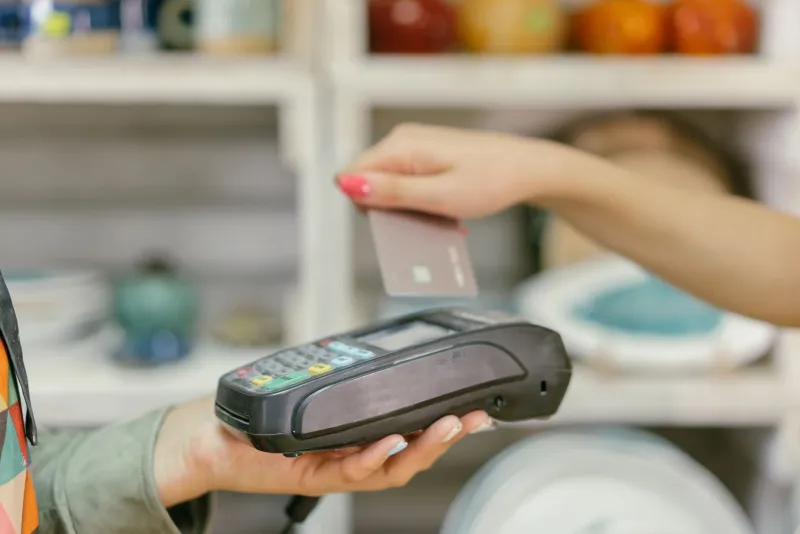
There's a moment most rewards card holders know well. You're at checkout, you've just swiped your premium travel card, and you feel a small, satisfying hit of dopamine knowing you just "earned" something. Maybe it's 3x points on dining. Maybe it's 2% back on everything. Whatever the flavor, the feeling is the same: you got a little something for free.
Except you didn't.
The uncomfortable truth about rewards programs is that they are not loyalty gifts from your bank. They are precision-engineered behavioral tools designed to make you spend more money than you otherwise would — and the gap between what you "earn" and what you actually spend to earn it is where your bank quietly prints money.
The Psychology Behind the Points
Rewards programs work because they reframe spending as earning. Every purchase becomes a small investment in a future vacation or a cashback check. That psychological reframe is enormously powerful. Research from the Journal of Marketing Research has consistently shown that consumers spend measurably more when they're enrolled in a points program versus when they're not — not because they're irrational, but because the program gives them a rationalization to spend.
You weren't going to splurge on the $90 dinner. But you're 200 points from Silver status, so sure, why not upgrade from the house wine. That's not a coincidence. That's product design.
Credit card companies also know that "points" feel less real than dollars. When you see $4.50 in cashback potential, you might hesitate. When you see "450 points," the abstraction softens the sting of what you actually spent to get there.
The Real Math on Rewards
Let's get concrete. The average American household with a rewards card carries a balance of roughly $5,700, according to Federal Reserve data. The average rewards card APR sits above 20%. The average "return" on a rewards card — even a generous 2% cashback card — maxes out at around $200 to $300 per year for a moderate spender.
If you carry a balance for even one billing cycle, the interest charges obliterate weeks of accumulated rewards. At 22% APR on a $5,000 balance, you're paying over $1,100 a year in interest alone. No travel rewards program on earth offsets that.
But the real trap isn't just for people who carry balances. Even disciplined, full-pay cardholders often fall into what researchers call "reward-induced overspending." A 2021 study from the National Bureau of Economic Research found that households enrolled in premium rewards programs spent an average of 12-18% more per category than comparable households using non-rewards cards. The rewards offset maybe 2%. The other 10-16% is pure profit for the bank.
How Banks Actually Make Money Off Their 'Best' Customers
Here's the irony: the customers banks market rewards programs to most aggressively — high-income, high-credit-score individuals — are also the ones who think they're gaming the system. The reality is the opposite.
Banks earn money on rewards card users through three channels that most cardholders never think about:
Interchange fees. Every time you swipe, the merchant pays a fee — typically 1.5% to 3.5% of the transaction. Premium rewards cards charge higher interchange rates. Your bank earns more every time you use your fancy travel card than it would if you paid cash or used a debit card. Merchants pass this cost on through slightly higher prices for everyone, including cash customers who get zero rewards.
Annual fees. The premium cards with the best rewards — your Chase Sapphire Reserve, your Amex Platinum — charge $250 to $695 per year. Banks count on the fact that most holders don't spend enough to justify the fee, but feel too locked into their points ecosystem to cancel.
Float and partial balances. Even people who "always pay in full" occasionally don't. Life happens. Banks know that statistically, a percentage of even the most disciplined cardholders will carry a balance at some point — and those months generate outsized revenue.
The Lifetime Cost of Rewards-Chasing
Run the numbers over a decade and the picture gets bleak. A household spending $3,000 per month on a rewards card, overspending by even 10% due to rewards psychology, is spending an extra $3,600 per year chasing points. Over ten years, that's $36,000 in excess spending — and that's before accounting for any interest charges or annual fees.
The rewards earned? Maybe $7,200 over the same period on a 2% card. You're still down nearly $30,000.
Compare that to a household that uses a no-fee debit card or a simple, low-interest credit card and maintains strict spending discipline. They don't earn rewards, but they also don't overspend to chase them. The compound effect of that disciplined spending — redirected into a high-yield savings account or invested in index funds — significantly outpaces any rewards program over a ten-year horizon.
So Should You Cancel Your Rewards Card?
Not necessarily. The goal here isn't to make you feel bad about your travel card. It's to make you aware of the game being played so you can play it more deliberately.
If you are a truly disciplined spender who never carries a balance, actually uses the card's benefits (airport lounges, travel credits, purchase protections), and would spend the same amount regardless of rewards, there are legitimate cases where a premium card adds value.
But be honest with yourself. Most people aren't that disciplined. Most people spend more because the card makes spending feel like earning. And if that describes you even a little, the rewards program is working exactly as your bank intended — and you're the product, not the beneficiary.
The Smarter Move
At AkaryCash, we talk a lot about making money work for you in the digital age. The digital payments ecosystem has made it easier than ever to automate spending, stack rewards, and optimize every transaction. But optimization is only valuable if the underlying behavior is sound.
Before you chase your next signup bonus, ask yourself: would I have spent this money anyway? If the honest answer is no, the points aren't a bonus. They're a discount on a purchase you didn't need to make.
That's not a deal. That's a trap with a loyalty program attached.