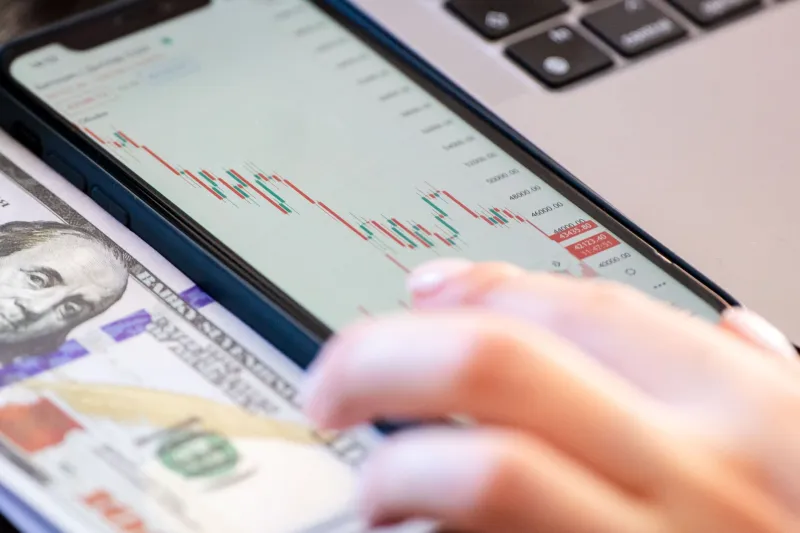
Logged In, Losing Out: The Hidden Cost of Never Disconnecting from Your Money
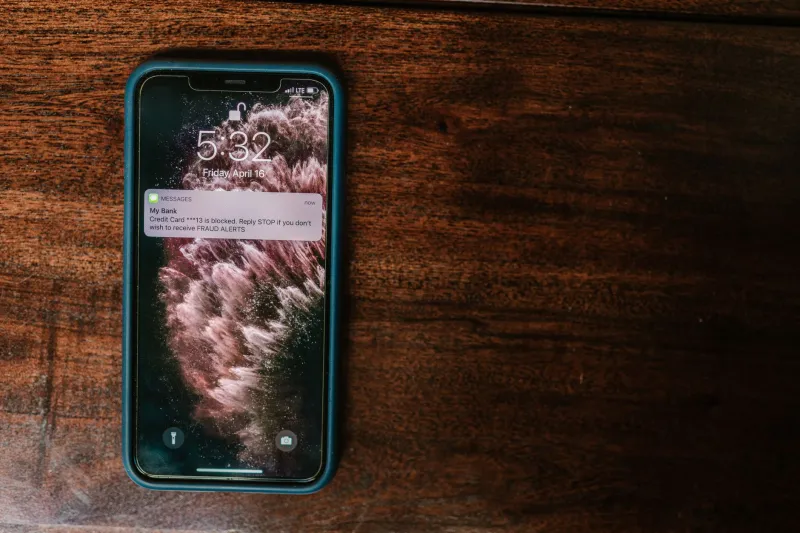
Your phone buzzes. Bitcoin dropped 4%. Your brokerage app flashes a red number. Your high-yield savings dashboard refreshes with a slightly lower APY. You've checked your net worth twice before lunch and it's not even noon yet.
This is the modern financial experience — and most people assume that staying this plugged in makes them smarter with money. Spoiler: it usually doesn't. In fact, that constant connection to your financial life might be one of the most expensive habits you have.
The Illusion of Control
There's a deeply human instinct at play here. When we watch something closely, we feel like we're managing it. Monitoring your portfolio every hour feels like active stewardship. Checking your bank balance before every purchase feels like discipline. Getting real-time crypto price alerts feels like staying ahead of the market.
But feeling in control and actually being in control are two very different things — and the financial industry has gotten extremely good at exploiting that gap.
The apps are designed to keep you coming back. Push notifications, red and green price tickers, percentage change counters — every one of these features is engineered to trigger an emotional response. And emotional responses are not your friend when it comes to building long-term wealth.
What the Research Actually Shows
A well-known study by behavioral economists Shlomo Benartzi and Richard Thaler found that investors who checked their portfolios less frequently were significantly more willing to hold higher-return (but more volatile) assets. Those who monitored constantly were more likely to panic-sell during dips and miss the recovery — the classic buy-high, sell-low trap.
More recent data from trading platforms shows that users with real-time alerts enabled trade up to three times more frequently than those without. More trading means more transaction fees, more taxable events, and — in most cases — worse returns compared to a simple buy-and-hold strategy.
The always-on financial life isn't just psychologically exhausting. It's mathematically costly.
FOMO Is a Fee You're Paying Every Day
Fear of missing out isn't just a social media problem — it's become one of the biggest hidden costs in personal finance. When you're watching crypto markets around the clock, every green candle you didn't catch feels like money left on the table. Every dip looks like an emergency.
That FOMO translates directly into impulsive trades, premature portfolio rebalancing, and chasing trends that are already priced in by the time you act on them. You're not early — you're reactive. And reactive investors consistently underperform patient ones.
At AkaryCash, we talk a lot about smart money moves for the digital age. And here's one that sounds counterintuitive: sometimes the smartest digital move is to close the app.
Reactive Rebalancing: When Tinkering Becomes a Tax Event
One of the sneakier costs of being too available to your finances is what we'd call reactive rebalancing — the habit of adjusting your portfolio in response to short-term market noise rather than your actual long-term strategy.
Let's say your target allocation is 60% stocks, 30% bonds, and 10% crypto. The market moves, your crypto position dips to 8%, and you immediately log in to rebalance. No big deal, right?
Except every time you sell assets to rebalance in a taxable account, you potentially trigger a capital gains event. Do that four or five times a year instead of once, and you've handed the IRS a meaningful slice of your returns — not because your strategy was wrong, but because you were watching too closely and acting too quickly.
Deliberate, scheduled rebalancing — say, quarterly or semi-annually — keeps your allocation on track without generating unnecessary tax drag.
The Scheduled Check-In: A Radical Act of Wealth Building
Here's a practical framework that goes against everything the fintech industry wants you to do: set a financial schedule and stick to it.
- Weekly: Review your spending from the past seven days. One session, fifteen minutes max.
- Monthly: Check account balances, savings progress, and any upcoming big expenses.
- Quarterly: Review your investment portfolio, rebalance if needed, and reassess any recurring subscriptions or fees.
- Annually: Full financial review — tax strategy, insurance, retirement contributions, estate basics.
That's it. Everything else is noise. You don't need to know where your 401(k) stands at 2pm on a Tuesday. You don't need a notification every time a stock in your portfolio moves more than 1%. These inputs don't improve your decisions — they just create more opportunities to make a bad one.
Turn Off the Ticker, Not Your Brain
This isn't an argument for financial ignorance. Staying informed about macroeconomic trends, understanding how interest rate changes affect your debt, or knowing when a crypto project you hold has a major protocol update — all of that matters. Education and awareness are genuinely valuable.
The problem is the frequency and immediacy of the information, not the information itself. There's a massive difference between reading a thoughtful weekly roundup of market developments and refreshing a price chart every 20 minutes.
One makes you a more informed investor. The other makes you a more anxious one.
Build Friction Back Into Your Financial Life
Fintech has spent a decade removing every possible barrier between you and your money. One-tap transfers. Instant buys. Zero-commission trades. These are genuinely useful features — but they've also eliminated the natural pause that used to exist before financial decisions.
That pause had value. It gave you time to think, to second-guess an impulse buy, to sleep on a trade idea. Now that pause is gone, and we're all paying for its absence.
You can manually reintroduce some of that friction:
- Delete trading apps from your phone's home screen (you can still access them via browser when you really need to)
- Turn off all non-essential financial push notifications
- Set a 24-hour rule before executing any unplanned investment move
- Use a separate account for long-term savings that isn't linked to your everyday banking app
Small barriers create meaningful pauses. Meaningful pauses save you from yourself.
The Quieter Path to Wealth
The most successful long-term investors aren't the ones glued to their screens — they're the ones who built a solid strategy, automated the basics, and then largely left it alone. Warren Buffett famously said his favorite holding period is forever. That's not a passive attitude toward wealth; it's an active rejection of the noise.
In the digital age, the ability to disconnect — to resist the pull of real-time data and let your financial plan do its job — is genuinely rare. And rare financial behaviors, when they're the right ones, tend to pay off.
Log in less. Earn more. It really can be that simple.