The Longer You Stay, The More Your Bank Charges You — Here's the Proof
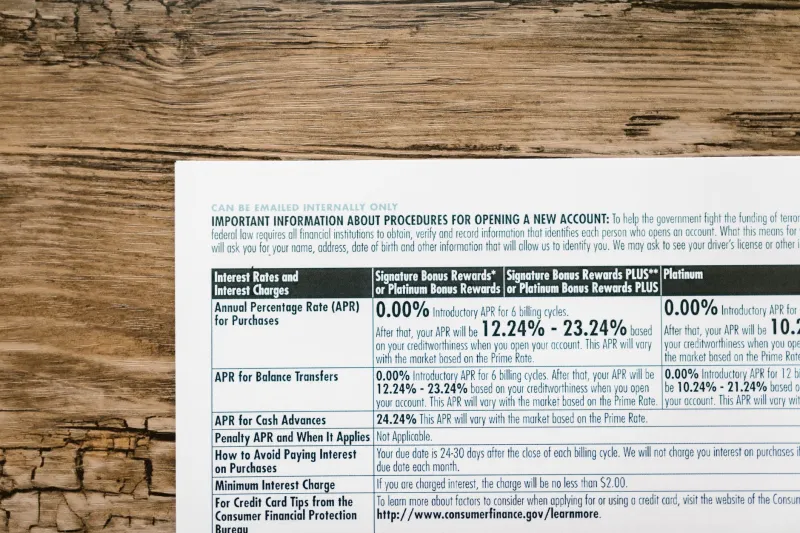
Imagine hiring a contractor who quotes you a competitive rate to win the job, then gradually raises their prices every year because they know you're not going to bother finding someone new. You'd fire them. You'd call it what it is: taking advantage of a relationship.
Your bank has been doing exactly this to you for years. The industry term for it is "loyalty penalty" — and unlike the contractor scenario, most people never even notice it's happening.
What the Loyalty Penalty Actually Looks Like
The mechanics are straightforward, even if the execution is subtle. Banks compete aggressively for new customers. To win your business, they offer promotional savings rates, waived fees, signup bonuses, and preferential terms. Once you're on board, inertia takes over. Changing banks feels complicated. Your direct deposit is set up. Your autopay is linked. Your checking account number is on file with a dozen services.
Banks know this. They bank on it — literally.
So the promotional rate on your savings account quietly drops after the intro period. The monthly fee that was waived for the first year reappears. The mortgage rate you were offered five years ago is now a percentage point higher than what the same bank is advertising to new customers. Your CD renewal rate is lower than the rate the bank is promoting for new deposits.
A 2022 analysis by the Consumer Financial Protection Bureau found that long-term checking account customers paid substantially more in fees than newer customers at the same institutions — not because they used more services, but because they were less likely to complain or leave. The banking industry's own research confirms that customer attrition is the primary driver of competitive pricing. Retention requires almost no competitive pricing at all.
The Savings Rate Squeeze
This is where the loyalty penalty hits hardest in the current rate environment. When the Federal Reserve raises rates, banks pass those increases on to new savings customers almost immediately — because they need to attract deposits. But they raise rates for existing customers far more slowly, if at all.
The gap between the best available high-yield savings rates and what the average existing customer earns at a traditional bank is routinely 3 to 4 percentage points. On a $25,000 savings balance, that gap represents $750 to $1,000 in lost interest per year. Over a decade, assuming modest rate fluctuations and compound interest, the difference between an engaged rate-shopper and a passive loyal customer can exceed $15,000 on that single account.
For someone managing multiple accounts — emergency fund, short-term savings, business reserves from a side hustle — the cumulative gap is even larger.
Mortgages and the Loyalty Myth
Many homeowners assume that being a long-standing customer gives them negotiating leverage when refinancing or renewing. The data consistently suggests otherwise.
A study published in the Journal of Financial Economics found that mortgage borrowers who shopped across multiple lenders received rates an average of 0.5% lower than those who returned to their existing institution. On a $350,000 mortgage, 0.5% over 30 years is roughly $35,000 in additional interest paid — to a bank that knows you're unlikely to leave.
This pattern repeats across products: auto loans, personal lines of credit, home equity lines. The bank's best offer is almost never reserved for the customer they already have. It's the bait for the customer they're trying to win.
Building a Strategic Switching Framework
The solution isn't to become pathologically disloyal or to switch banks every six months for the sake of it. The goal is to be a deliberate, informed customer who treats banking relationships the way banks treat you: transactionally, with your own financial interests as the primary consideration.
Here's a framework that works:
Annual account audit. Once a year, compare your current savings rate, checking fees, and loan terms against what's available in the market. This takes about 20 minutes and should be a standard part of your annual financial review. Sites that aggregate bank rates make this straightforward. If your current institution is within 0.25% of the best available rate, staying probably makes sense. If the gap is larger, it's time to have a conversation or make a move.
The negotiation test. Before switching, call your bank and tell them what competitors are offering. Many banks will match or come close to matching competitive rates for customers who explicitly ask — because retaining a customer is cheaper than acquiring a new one. If they won't budge, you have your answer.
Staggered account strategy. You don't have to consolidate everything at one institution. Keep your primary checking at a bank with strong branch access and a reliable app. Park your emergency fund and savings at a high-yield online bank that competes aggressively for deposits. Use a credit union for loans when rates are favorable. This diversification isn't complicated — it's just treating each account type as a separate decision.
New customer offer cycles. Most banks rotate their best promotional rates and bonuses on a predictable cycle. If you're considering a switch, timing it to coincide with a new-customer promotion can stack an additional $200 to $500 in signup bonuses on top of the improved ongoing rate. Over a lifetime of strategic switching, these bonuses alone can add up to several thousand dollars.
Manage the friction deliberately. The biggest barrier to switching isn't research — it's the hassle of updating direct deposits, autopay, and linked accounts. Create a simple checklist of everything linked to your checking account. Most switches can be fully executed in a weekend. The one-time inconvenience is worth it when the math clearly favors moving.
The Lifetime Wealth Calculation
Let's put real numbers on this. A household that actively manages its banking relationships — switching savings accounts every two to three years to capture the best rates, negotiating mortgage and loan rates at renewal, and capturing new-customer bonuses — can reasonably expect:
- $10,000 to $20,000 in additional savings account interest over 30 years versus a passive customer at a traditional bank
- $20,000 to $40,000 in mortgage interest savings through competitive refinancing and rate shopping
- $2,000 to $5,000 in accumulated new-customer bonuses across checking, savings, and credit products
That's a realistic range of $30,000 to $65,000 in lifetime financial benefit — just from being a deliberate banking customer rather than a passive one. That's not investing genius. That's not a side hustle. That's just refusing to let your bank's inertia strategy work on you.
Loyalty Is a Virtue — Just Not in Banking
There's nothing wrong with valuing relationships. But banks are not your friends. They are businesses with shareholders, and their pricing reflects that reality. The customer they love most is the one who stays put, asks few questions, and never compares rates.
Don't be that customer.
At AkaryCash, the whole premise is that smart money moves in the digital age require you to be as sophisticated as the systems managing your money. The tools to compare rates, open accounts online in minutes, and transfer funds between institutions have never been more accessible. The only thing standing between you and a better deal is the willingness to use them.