Speed Kills (Your Portfolio): How Frictionless Finance Is Quietly Wrecking Your Wealth
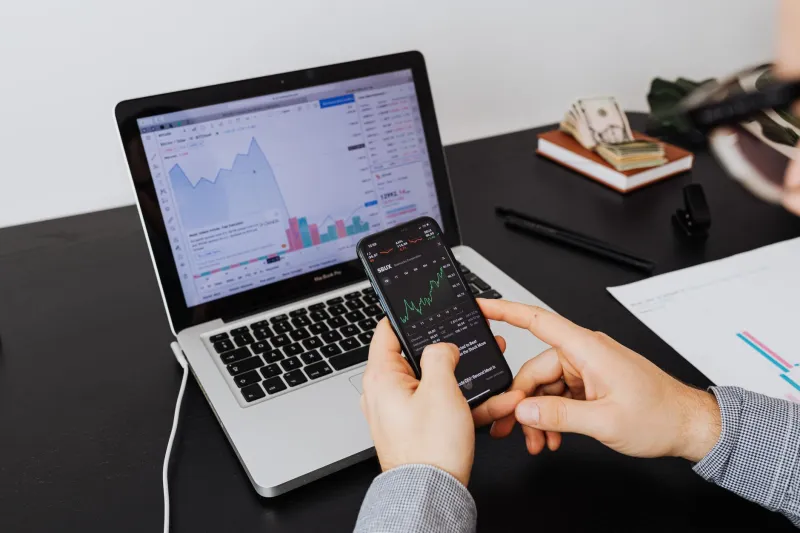
There's a version of the future that fintech companies sold us a few years ago. It went something like this: remove all the friction from your finances, make everything instant, and watch your wealth grow. Tap a button, money moves. Swipe right, trade executed. Link an account, funds transferred in seconds.
And honestly? It's incredible. The infrastructure behind modern money movement is genuinely impressive.
But here's the thing nobody put in the pitch deck: friction wasn't always the enemy. Sometimes, the small delay between wanting to do something with your money and actually doing it was the only thing standing between you and a really expensive mistake.
Your Brain on Instant Gratification
When you had to call your broker, wait on hold, and verbally authorize a trade, you had time to think. When transferring money between accounts took two to three business days, you had a natural cooling-off period baked in. That waiting wasn't a bug — for a lot of people, it was a feature.
Now, that buffer is gone. And behavioral economists have been tracking what happens when it disappears.
Research out of the University of California found that investors who trade more frequently don't just underperform the market — they underperform it by a significant margin, often by 1.5% to 3.7% annually depending on the asset class. That might sound small, but compounded over 20 or 30 years, the gap between a patient investor and a high-velocity one can easily stretch into six figures.
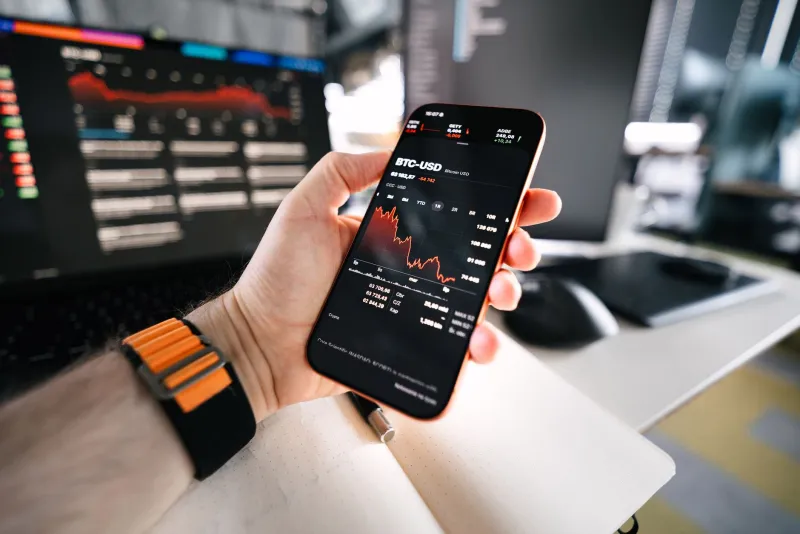
The problem isn't intelligence. It's wiring. Human brains are genuinely not built for the speed at which modern fintech allows us to make decisions. We're pattern-seeking creatures who respond to urgency, novelty, and social proof — and every real-time trading app, crypto exchange, and payment platform is essentially a dopamine slot machine optimized to trigger all three.
The Transaction Frequency Trap
Let's talk about some numbers that might sting a little.
A 2023 Dalbar study on investor behavior found that the average equity fund investor earned roughly 6.2% annually over a 30-year period — while the S&P 500 itself returned around 10.2% over the same stretch. The gap? Mostly explained by timing decisions. People bought high when excitement peaked and sold low when fear hit. They moved fast, and it cost them.
In crypto, the story is even more dramatic. Data from Chainalysis and various on-chain analytics platforms consistently shows that the wallets holding assets for longer periods — sometimes called "diamond hands" in internet slang — dramatically outperform wallets with frequent transaction activity, even during bull markets.
High transaction frequency doesn't just hurt returns directly. It also generates more taxable events, more fees, and more cognitive load. Every decision you make costs mental energy, and when you're making dozens of micro-decisions about your money every week, you're depleting the exact resource you need for the big, strategic calls that actually build wealth.
The Fintech Experience Is Designed for Volume, Not Wisdom
This isn't a conspiracy — it's just business. Most fintech platforms make money when you move money. Exchanges earn on spreads and trading fees. Payment apps monetize transaction data. Even "free" platforms often benefit when you stay active, engaged, and clicking.
The UX design of these tools reflects that incentive. Notifications ping you when markets move. Colorful charts make small fluctuations look dramatic. Portfolio views update in real time, nudging you to react to information that a long-term investor probably shouldn't care about at all.
None of this is inherently evil. But it's worth being clear-eyed about what you're navigating when you open your investment app at midnight because you saw a crypto tweet that made your stomach drop.
Slower Money, Smarter Outcomes
So what does intentional, lower-velocity money management actually look like in practice? A few things:
Set a review cadence and stick to it. Instead of checking your portfolio daily — or worse, hourly — commit to a weekly or monthly review. This alone has been shown to reduce panic selling and impulsive rebalancing. When you're not watching every tick, you're less likely to react to noise.
Add artificial friction where platforms won't. Some investors deliberately move assets to platforms that are slightly harder to access — a hardware wallet for crypto, or a separate brokerage account that requires a few extra steps to trade. The inconvenience is the point.
Separate your spending money from your investing money — digitally and psychologically. One of the sneakiest ways velocity traps people is through blurred boundaries. When your everyday spending account is one tap away from your investment account, impulse decisions get a lot easier to execute.
Automate the strategy, not the reaction. Automation is genuinely powerful — but it works best when you're automating a pre-planned strategy, not your emotional responses. Dollar-cost averaging into an index fund on a fixed schedule is smart automation. Instantly deploying cash whenever a coin dips 8% because your phone buzzed is reactive automation, and it's a very different animal.
The Counterintuitive Edge
Here's what's interesting about all of this: in a world where everyone has access to the same real-time data, the same instant execution tools, and the same frictionless platforms, the actual competitive advantage might belong to the person who chooses not to use all of it.
When everyone can move fast, moving slow becomes the differentiated strategy.
Warren Buffett famously said the stock market is a device for transferring money from the impatient to the patient. That quote is old, but the dynamic it describes has only gotten more pronounced in the age of app-based trading and 24/7 crypto markets.
The digital financial tools available today are genuinely powerful. At AkaryCash, we're big believers in using technology to manage money smarter — but smarter doesn't always mean faster. Sometimes it means building a system that protects you from your own worst impulses, especially when those impulses have never been easier to act on.
Your Move (But Maybe Wait a Minute First)
Next time you feel the urge to make a quick financial move — a fast transfer, a reactive trade, a same-day reallocation based on something you read in a Reddit thread — try pausing for 24 hours. Write down what you're thinking of doing and why. Sleep on it.
If the decision still makes sense in the morning, great. Execute it with confidence. But if it looks different after a night's sleep, you just saved yourself from the velocity trap.
In finance, the fastest finger doesn't always win. And in the digital age, the discipline to slow down might be the most valuable skill you can build.